Friday, December 21, 2012


Monday, November 26, 2012

Sunday, November 25, 2012
Friday, November 23, 2012
Urban Sustainability: EJ, Stewardship and Greening in the Red Zone
A recap of the presentation given recently at CUNY Law.
Urban Sustainability: EJ, Stewardship and Greening in the Red Zone »
To see a video of the presentation, go here.
Urban Sustainability: EJ, Stewardship and Greening in the Red Zone »
To see a video of the presentation, go here.
Saturday, November 10, 2012
Tidball leads NY EDEN efforts to prepare for and respond to Hurricane Sandy

Cornell Cooperative Extension's NY Extension Disaster Education Network (EDEN), led by Keith Tidball of Cornell Department of Natural Resources, was heavily involved in a blitz of preparedness and readiness disaster education in the days prior to Hurricane Sandy's landfall, and in disaster education dealing with response and recovery after the Hurricane damaged large portions of New York City and Long Island. As a part of these activities, Tidball and other members of the NY EDEN team and the CCE Disaster and All-hazards Response Team (DART) were called upon to provide research-based information to the news media. A sampling is presented below:
NBC News
USA Today
Huff Post
Cornell Chronicle
I100 Classic Rock
WHCU AM
For more information about NY EDEN and Hurricane Sandy, see the NY EDEN Twitter feed or you can visit the NY EDEN Facebook page.
Thursday, November 8, 2012
Landscapes of Resilience-- Detroit Mi & Joplin MO
Presented in Detroit, MI and Joplin, MO to the board and staff of the TKF Foundation on November 7th & 8th, 2012.
Wednesday, October 17, 2012
Wednesday, October 3, 2012

Sunday, September 30, 2012
Greening in the Red Zone: Thoughts on disaster, resilience and community greening in the peopled landscape | The Nature of Cities
A blog post on the blog "the Nature of Cities".... Greening in the Red Zone: Thoughts on disaster, resilience and community greening in the peopled landscape | The Nature of Cities
Tuesday, September 25, 2012
Disabled veterans climb iconic Teton on 9/11 anniversary
Work from the Returning Warriors project is mentioned here:
Disabled veterans climb iconic Teton on 9/11 anniversary | The Salt Lake Tribune
Disabled veterans climb iconic Teton on 9/11 anniversary | The Salt Lake Tribune
Friday, September 7, 2012
Thursday, September 6, 2012
Tuesday, September 4, 2012
Monday, July 9, 2012
Rio +20 United Nations Conference on Sustainable Development
They all participated in:
Urban Nature 2-day conference in Belo Horizonte
ICLEI World Congress http://worldcongress2012.iclei.org/ (a parallel event)—Belo Horizonte
Rio+20—various meetings and presentations as below.
In addition, Keith Tidball is part of the core team from ICLEI, Cornell, Stockholm Resilience Centre, and City of Jerusalem that prepared the Urban Biosphere (URBIS) designation system, which was signed on to by about 50 cities at the ICLEI side events and endorsed by the Secretariat of the Convention on Biological Diversity. Finally, Keith organized the entire Cornell delegation’s participation.
Below is a list of specific Cornell contributions.
KEITH TIDBALL—Two presentations and core team member, URBIS
Tidball, KG. History of the Urban Biosphere initiative. ICLEI Urban Nature Forum. Belo Horizonte, Brazil. 14 June 2012.
Tidball, KG. Greening in the Red Zone. Cities and Biodiversity Outlook Workshop. Rio+20 meetings. Rio de Janeiro, Brazil. 18 June 2012.
KATHY BUNTING-HOWARTH—participant in three RIO+20 events and panelist in third event
Panelist: U.S. Side Event at Rio +20
Putting Words to Action: Implementing the Rio +20 Fisheries Recommendations
Participant: Global Oceans Day at Rio +20 (sponsored by the Global Oceans Forum and IOC-UNESCO) (a parallel event) –below from attached draft agenda
Participant: Advancing Sustainability through Communication and Collaboration, (an official UN side event hosted by the University of Colorado)
Participant. Oceans at Rio+20: Toward Implementation of the Rio Ocean Commitments (an official UN side event hosted by International Coastal and Ocean Organization, Secretariat of the Global Oceans Forum)
JOSH CERRA—one presentation
Cerra, J. Urban biodiversity: The contribution of science. ICLEI World Congress. Belo Horizonte, Brazil. 15 June 2012.
MARIANNE KRASNY—three presentations
Krasny, ME. Environmental Education and Social-ecological Systems Theory. ICLEI Urban Nature Forum. Belo Horizonte, Brazil. 14 June 2012.
Krasny, ME. Resilience, Learning, and Environmental Education. ICLEI World Congress. Belo Horizonte, Brazil. 16 June 2012.
Krasny, ME. Urban landscapes as learning arenas for sustainable management of biodiversity and ecosystem services. Cities and Biodiversity Outlook Workshop. Rio+20 meetings. Rio de Janeiro, Brazil. 18 June 2012
Those activities included (1) the official launch of the URBIS Initiative at the ICLEI World Congress in Belo Horizonte, (2) the pre-launch of the Cities Biodiversity Outlook at the Global Town Hall in Rio De Janeiro, and (3) interviews of key players in the biodiversity and urban nature arenas such as Oliver Hillel, Kobe Brand, Dr. Braulio Dias, and professor Thomas Elmqvist.
 |
| Bringing biodiversity back into cities |
 |
| Urban nature, local governance |
 |
| Pre-launch Cities and Biodiversity Outlook |
 |
| Urbanisation, biodiversity and ecosystems |
Thursday, June 14, 2012
The Urban Biosphere Initiative- post Rio+20
 |
| Figure 1. URBIS Initiative signing ceremony on 14 June 2012. The ceremony followed a series of presentations and interactive discussions exploring the history, current developments, practical applications, and future opportunities for Urban Biospheres. |
Firstly, Josh Cerra (Cornell University) facilitated a panel of renowned scientists including Thomas Elmqvist (Stockholm Resilience Center), Marianne Krasny (Cornell University) and Peleg Kremer (The New School) to unearth the science that should feed into policy. They drew from cutting edge research to outline academic advances and aspects of social-ecological systems theory including education and value profiles in urban landscapes. Thereafter, a panel of URBIS partners facilitated by Russell Galt (ICLEI) shed further light on the URBIS initiative. Keith Tidball (Cornell University) charted the history, milestones and development of URBIS before Yoel Siegel (City of Jerusalem) reported on the outcomes of the 1st international URBIS workshop recently hosted by the City of Jerusalem and outlined some good practices implemented in the city. Similarly, Katrin Hammarlund (Swedish Society for Nature Conservation), presented measures taken in the Stockholm Urban Biosphere to conserve and promote the benefits of green infrastructure.
The aforementioned signing ceremony which followed was graced by additional dignitaries including the Commissioner of Hyderabad, Babu M.T. Krishna, whose city will play host to the next CBD Conference of the Parties.
Kobie Brand (ICLEI) stated: “It is most encouraging that so many organizations appreciate the critical role of cities in the sustainability agenda and also recognize the tremendous utility of learning exchanges in spurring collaborative action. This constitutes a major milestone in our collective efforts to engender urban regions with greater social-ecological resilience in the context of global environmental change.”
 |
| Figure 2. Dignitaries in the URBIS ceremony (from left to right): Kumar Emani, Executive Director, ICLEI South Asia office; Babu M.T. Krishna, Commissioner of Hyderabad; Gino van Begin, Deputy Secretary General, ICLEI; Thomas Elmqvist, Professor, Stockholm Resilience Center; David Cadman, President, ICLEI; Braulio Ferreira de Souza Dias, Executive Secretary, CBD Secretariat; Kobie Brand, Global Biodiversity Coordinator, ICLEI; and Oliver Hillel, Programme Officer, CBD Secretariat. Image: R. Galt. |
Background
The concept of urban biosphere (URBIS) emerged amidst increasing awareness that cities are not discrete, self-contained entities, but rather are dynamic nodes of activity, absorbing vast quantities of natural resources, producing massive amounts of waste, interacting profoundly with their encompassing bioregions, and substantially altering both near and distant ecosystems. At the same time, modern cities offer unprecedented and often untapped opportunities for innovation, efficiency-gains, leadership and social organization. The imperative for action to harness such opportunities and render extractive cities more ecologically restorative spurred the birth of an international initiative to address the design and governance of urban regions and surrounding ecosystems. Today, the URBIS initiative comprises a global alliance of partners aspiring to reconcile urban development with the conservation of biodiversity and the sustainable use of natural resources – a quest to engender cities with greater social-ecological resilience in the context of global environmental change. The initiative aligns with broader international efforts to implement the ecosystem approach and build inclusive green urban economies. In particular, the initiative seeks to contribute to the achievement of the CBD Aichi Targets, specifically Decision X/22 and the Plan of Action endorsed therein to promote engagement of local governments in the Convention.
The Cities Biodiversity Center of ICLEI – Local Governments for Sustainability hosts the URBIS Secretariat, a role which is executed in close partnership with the Stockholm Resilience Centre (SRC) as Scientific Coordinator and the Secretariat of the Convention on Biological Diversity (SCBD) as a facilitator between local, sub-national and national governments. Partners include local and sub-national governments, ministries, international organizations, non-governmental organizations, research institutions and individuals. At the 10th Conference of the Parties to the Convention on Biological Diversity (CBD COP10), in Nagoya, Japan, 2010, a number of additional partners formalized their support for the URBIS initiative by way of a declaration. These partners include Cornell University, the United Nations University (UNU), the United Nations Educational Scientific and Cultural Organization (UNESCO), the International Union for Conservation of Nature (IUCN), and the Swedish Society for Nature Conservation as well as a number of founding cities. More recently, The New School of New York has become an active URBIS partner and several cities including Jerusalem, Sao Paulo, Montreal and Stockholm, have taken a leading role in developing and promoting the initiative. For more information about the URBIS Initiative, see www.URBIS.org.
Sunday, April 29, 2012
WWIAF Field & Stream "Heroes for a Day"

As part of his Federal Formula Funds study Returning Warriors : A Study of the Social-Ecological Benefits of Coming Home to Nature, Tidball recently participated in the Wounded Warriors in Action Foundation's habitat restoration activities at Camp Hackett in northern Wisconsin. This activity was recognized by Field & Stream's Hero for a Day project and was filmed by the Field and Stream crew to be highlighted here.
Local news media also covered the event. See the below links:
video http://www.waow.com/story/17901697/wounded-warrior-in-action-foundation-helps-purple-heart-veterans-in-phillips
video http://cdn.bimfs.com/WJFW/4b389204416439bed6a3bbf0b964121dea8ac195_fl9.mp4
http://www.wjfw.com/email_story.html?SKU=20120429154342
My photographs from the event can be found here:
http://www.flickr.com/photos/wheniwax/sets/72157629561185630/
More photos from the Field & Stream staff, here:
http://www.wisconsinoutdoorfun.com/apps/pbcs.dll/gallery?Avis=U0&Dato=20120430&Kategori=WOF06&Lopenr=204300801&Ref=PH
Thursday, April 5, 2012
URBIS in Jerusalem
Jerusalem, Israel recently hosted a 2 day workshop on URBIS - Urban
Biospheres, a collaborative program among partners such the Cornell DNR Civic
Ecology Lab, the Stockholm Resilience Center, ICLEI, UNESCO, and others. Keith Tidball was among thirteen international experts in ecology, biodiversity
management and community engagement, who convened with over 50 key local
professionals to produce strategies for moving forward with an urban biosphere
concept that transcends municipal boundaries and is based on cooperation in the
region. Their work, using Jerusalem as a case study, is currently being
summarized for presentation at the Rio+20 Summit in June. The following are
reviews of the workshop and two pieces on the symbolically important swift (apus apus) including a short film
documenting the Annual Welcome Ceremony for the Swifts at the Western Wall,
which concluded the workshop events:
Thursday, March 29, 2012
New publication-- Chapter in Citizen Science, Public Participation in Environmental Research
This book is out now-- Citizen Science, Public Participation in Environmental Research
See Chapter 16. A Role for Citizen Science in Disaster and Conflict Recovery and Resilience
by Keith G. Tidball and Marianne E. Krasny
See Chapter 16. A Role for Citizen Science in Disaster and Conflict Recovery and Resilience
by Keith G. Tidball and Marianne E. Krasny
Thursday, February 2, 2012
Greening in the Red Zone Book Interview
Weatherproofing Your Landscape: Since You Asked...About Greening in the Red Zone: The new year isn't even a month old, and communities from the Pacific Northwest to the Deep South have already experienced severe—in some ca...
Monday, January 23, 2012
NCSE Environment & Security Conference
The Cornell University Civic Ecology Lab was a collaborating organization at the recently held NCSE 2012 conference on Environment & Security. Tidball presented Greening in the Red Zone, and also served as a panel member in a session on Environmental Literacy and Security.


Tuesday, November 8, 2011
Friday, November 4, 2011
2011 Global Environmental Action Conference Tokyo, Japan
I was invited to present at the GEA International Conference 2011 entitled Building Sustainable Societies through Reconstruction, Working with the International Community for Regenerating Japan," held in Tokyo, Japan on 14th and 15th of October, 2011. The Conference was opened with the attendance of H.I.H Crown Prince, Naruhito, GEA Chairman, Mr. Juro Saito and Mr.Yoshihiko Noda Prime Minister of Japan. Director-General of GEA, Ms. Wakako Hironaka presided over the Conference as its Chair.

Pictures from the meeting are here. My presentations in English and Japanese appear below:
My presentation in Japanese is here:
 |
| Japan's Crown Prince Naruhito |
 |
| Japan's Prime Minister Noda |
 |
| Keith Tidball of Cornell University Civic Ecology Lab and NY EDEN |

The conference was organized by the Global Environmental Action (GEA) supported by the Government of Japan, namely, Ministry of Foreign Affairs, Ministry of Finance, Ministry of Education, Culture, Sports, Science, and Technology, Ministry of Agriculture, Forestry and Fisheries, Ministry of Economy, Trade and Industry, Ministry of Land, Infrastructure, Transport and Tourism, and Ministry of the Environment. The Conference aimed to undertake a high-level policy dialogue in order to articulate concrete measures to realize sustainable societies not only in Japan, but also in the international community, capitalizing on Japan’s experience of the recent earthquake, tsunami, and nuclear disasters.
Pictures from the meeting are here. My presentations in English and Japanese appear below:
My presentation in Japanese is here:
Wednesday, September 28, 2011
Wednesday, July 20, 2011
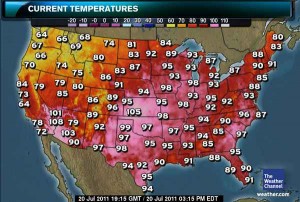
Serious business: The evidence on heat waves
Some EDEN work appeared on the College of Human Ecology blog Evidence-Based Living...click on the picture.
Friday, July 1, 2011

Monday, June 20, 2011

Wednesday, May 4, 2011

Tuesday, March 22, 2011
Urgent Biophilia- Presentation at Resilience 2011
This presentation is Chapter 4 of the forthcoming book Greening in the Red Zone: Disaster, Resilience, and Community Greening.
Urgent Biophilia - Resilience 2011
For the full chapter in PDF form, see Civic Ecology Lab Publications.
Tuesday, February 15, 2011
Monday, January 31, 2011
Conceptual Framework for Civic Ecology Education
My latest article "Urban Environmental Education From a Social-Ecological Perspective: Conceptual Framework for Civic Ecology Education" has been published in Cities and the Environment (CATE).
http://escholarship.bc.edu/cate/vol3/iss1/11/
http://escholarship.bc.edu/cate/vol3/iss1/11/
Sunday, January 16, 2011
"Oak Hatred" in Historic Sweden
 On a recent trip to Sweden I was talking to a few of my colleagues about my interests in tree symbolism, while on a hike through a forested area in Stockholm featuring a few ancient oaks. My colleagues related to me the following: "a monarch decided in the 16th or 17th Century that oak were not to be cut since they should be used for warship building. This resulted in noblemen being ordered to protect oaks, whereas farmers stamped out and killed oak seedlings as fast as they could. If the farmers let the oaks grow up, they would loose usable land surface. So, on the whole, we lost oaks."
 I found this accounting for the decline in oaks interesting both in terms of symbolic importance, and in terms of unintended consequences of management within Social-Ecological Systems.
I looked into this further and discovered a scholarly accounting of this phenomena by Per Eliasson, University of Lund, Sweden. He says, in a paper titled "The political history of the oaks in Sweden from the 16th to 20th century," that "The conflict in Sweden between the state power and the peasants over oak trees was one about many different values – culture, economy, politics and ecology. It was not only about ownership and timber, but also about the oaks role in damaging the crops and about the oak as a symbol of the crown." In another related paper titled "The Oak Tree, from Peasant Torment to a Unifying Concept of Landscape Management" by Jerker Moström of the National Heritage Board of Sweden, we learn of the Swedish historical expression “Tender oak trees and young noblemen should be hated,” an ironic peasant saying originating from the 18th century. According to Moström, the saying expresses the hatred within the peasant community towards the nobility and the oak trees at that time, caused by what they perceived as injustices in the contemporary Swedish forestry acts. He says that during the 17th century the oak became not only an important source of income for the nobility but also a physical symbol of the wealth and power of the aristocracy.
These papers and others can be found in the proceedings from a conference held in Linköpin, Sweden called The Oak – History, Ecology, Management and Planning, report 5617, May 2006. I found this interesting to contrast with the symbolism of the oak in the New World, especially the contemporary meanings I am exploring of the Live Oak in post-Katrina New Orleans and more broadly within the Gulf Coast region. These symbolic meanings of the oak and other trees in post-Katrina New Orleans are treated in depth in the forthcoming book Greening in the Red Zone in a chapter titled: Trees and Rebirth: Symbol, Ritual, and Resilience in Post-Katrina New Orleans.
I looked into this further and discovered a scholarly accounting of this phenomena by Per Eliasson, University of Lund, Sweden. He says, in a paper titled "The political history of the oaks in Sweden from the 16th to 20th century," that "The conflict in Sweden between the state power and the peasants over oak trees was one about many different values – culture, economy, politics and ecology. It was not only about ownership and timber, but also about the oaks role in damaging the crops and about the oak as a symbol of the crown." In another related paper titled "The Oak Tree, from Peasant Torment to a Unifying Concept of Landscape Management" by Jerker Moström of the National Heritage Board of Sweden, we learn of the Swedish historical expression “Tender oak trees and young noblemen should be hated,” an ironic peasant saying originating from the 18th century. According to Moström, the saying expresses the hatred within the peasant community towards the nobility and the oak trees at that time, caused by what they perceived as injustices in the contemporary Swedish forestry acts. He says that during the 17th century the oak became not only an important source of income for the nobility but also a physical symbol of the wealth and power of the aristocracy.
These papers and others can be found in the proceedings from a conference held in Linköpin, Sweden called The Oak – History, Ecology, Management and Planning, report 5617, May 2006. I found this interesting to contrast with the symbolism of the oak in the New World, especially the contemporary meanings I am exploring of the Live Oak in post-Katrina New Orleans and more broadly within the Gulf Coast region. These symbolic meanings of the oak and other trees in post-Katrina New Orleans are treated in depth in the forthcoming book Greening in the Red Zone in a chapter titled: Trees and Rebirth: Symbol, Ritual, and Resilience in Post-Katrina New Orleans.
Tuesday, January 4, 2011
Anthropology, Science and the Art of Media Sensationalization
Recently, a colleague known for "button-pushing" found ammunition to load his derision gun with, in the media hype surrounding the American Anthropological Association's (AAA) so -called controversy regarding science. Hundreds of anthropologists voiced their concern to the New York Times a few days later. The AAA has since posted a response to the public controversy over science in anthropology, in which they state: Some recent media coverage, including an article in the New York Times, has portrayed anthropology as divided between those who practice it as a science and those who do not, and has given the mistaken impression that the American Anthropological Association (AAA) Executive Board believes that science no longer has a place in anthropology. On the contrary, the Executive Board recognizes and endorses the crucial place of the scientific method in much anthropological research.
Stay tuned.
Tuesday, December 14, 2010
URBIS Gains Traction
The URBIS Partnerships initiative has gained some traction within the UN system and appears to be poised to become a major player in the Global Biodiversity discussion. A landmark agreement was signed at the COP 10 meetings in Nagoya, Japan by CBD Global Partnership of Cities and Biodiversity and other collaborators.
Click here for a journal article about UR BIS.
BIS.

Click here for a journal article about UR
 BIS.
BIS.
Tuesday, November 2, 2010
Presentation at City Summit, COP 10- Nagoya, Japan
I recently was invited to contribute to the climate change discourse on an international stage, at the COP 10 (Convention on Biological Diversity) meetings in Nagoya, Japan. Here are some photographs and the presentation I gave as part of the Cities and Biodiversity Summit.


Sunday, October 17, 2010
World Expo Shanghai
I was fortunate to be a part of a number of events hosted by the Swedish Government and the Stockholm Resilience Center at the World Expo in Shanghai!
One event was the "Future cities, Future citizens" Open Seminar at Nordic Light House, Shanghai, China. 
I was especially proud of the work of Rocking the Boat at the event.
For pictures of the amazing city of Shanghai, see here.
One event was the "Future cities, Future citizens" Open Seminar at Nordic Light House, Shanghai, China.

I was especially proud of the work of Rocking the Boat at the event.
For pictures of the amazing city of Shanghai, see here.
Monday, October 4, 2010
Greening in the Red Zone in AnthroNews

October Anthropology News In Focus commentaries on disaster relief and recovery are now posted on the American Anthropological Association's Current Featured News page, free to the public throughout the month. This month’s In Focus articles are by Susanna M Hoffman; Jane Henrici; Miriam S Chaiken; Roberto Barrios; Michele Ruth Gamburd and Dennis B McGilvray; Keith G Tidball; Susann Ullberg; Lakshmi Fjord; and Anthony Oliver-Smith. Full issue content is available via AnthroSource, including additional thematic articles from other sections by contributors Graham A Tobin, Linda M Whiteford, Eric C Jones and Arthur D Murphy; Laura Wagner; Jérôme Grimaud; Marisa O Ensor; Howard F Stein; and Adam Koons.
This month’s issue also features color photographs in the online version.
After the catastrophic January 2010 earthquake in Haiti, AN immediately began hearing anthropologists discuss how they might contribute to recovery efforts. This was no surprise, given anthropologists’ frequent engagement with human rights, public health and social justice issues. With many practicing and academic anthropologists deeply involved with short- and long-term disaster relief and recovery efforts throughout the world, this thematic series explores how anthropology can make a difference in such challenging circumstances.
Friday, October 1, 2010
NAAEE 2010
The North American Association of Environmental Education held its annual meeting in Buffalo, NY this year. I was fortunate to be asked to serve as one of two respondents to the keynote address, given by Stephen Kellert. The remarks I made can be found here.
Dr. Kellert and I enjoyed some down-time after our presentations and explored Niagara Falls from the ever-popular Maid of the Mists. It was great getting to know him better, and comparing notes on biophilia, Urgent Biophilia, and even how hunting and fishing might be explored as expressions of Biophilia... stay tuned for more on that.
Dr. Kellert and I enjoyed some down-time after our presentations and explored
 Niagara Falls from the ever-popular Maid of the Mists. It was great getting to know him better, and comparing notes on biophilia, Urgent Biophilia, and even how hunting and fishing might be explored as expressions of Biophilia... stay tuned for more on that.
Sunday, August 15, 2010
Thursday, August 5, 2010
Monday, August 2, 2010


Monday, July 19, 2010

Wednesday, June 9, 2010
Thursday, May 13, 2010
Sunday, April 18, 2010
Citizen involvement in wetland restoration
See also a related report in the Cayuga Lake Watershed News here.
View more presentations from Keith Tidball.
Tuesday, April 6, 2010
INTERNATIONAL TRAVEL GRANT AWARD
EINAUDI CENTER INTERNATIONAL TRAVEL GRANT AWARDS
Keith Tidball was among the 62 research travel grants for the 2010-2011 academic year awarded by the Einaudi Center. The recipients came from a variety of graduate fields across seven colleges. Most recipients (40%) are headed to Asia. A sizable number are traveling to Europe (25%), Africa (25%) and Latin America (10%) respectively.
Tidball's research proposal is titled "Greening and Greenspace as Conflict Amelioration in a South African Informal Settlement."
To view recipients of travel grants and explore the new interactive world map that provides an overview of their destinations, see http://www.einaudi.cornell.edu/funding/tg_recipients.asp.
Keith Tidball was among the 62 research travel grants for the 2010-2011 academic year awarded by the Einaudi Center. The recipients came from a variety of graduate fields across seven colleges. Most recipients (40%) are headed to Asia. A sizable number are traveling to Europe (25%), Africa (25%) and Latin America (10%) respectively.
Tidball's research proposal is titled "Greening and Greenspace as Conflict Amelioration in a South African Informal Settlement."
To view recipients of travel grants and explore the new interactive world map that provides an overview of their destinations, see http://www.einaudi.cornell.edu/funding/tg_recipients.asp.
Tuesday, March 23, 2010

Saturday, March 13, 2010
A Conversation with Students in Stockholm

I was invited to speak with a group of about a 100 young people attending Global College, an upper secondary school that is located in the center of Stockholm, the capital of Sweden. Global College is a public school with approximately 400 students between the ages of 16-19, and 25 teachers. All public schooling in Sweden is free of charge and co-educational.
Thomas Elmqvist from the Stockholm Resilience Center spoke about global change and teh importance of resilient strategies for the urban environment. I spoke with the students about New York City's Million Trees campaign. The questions these students asked were insightful and plentiful. I was impressed. And I was proud of New York City.
Friday, March 12, 2010
Wednesday, March 10, 2010

Friday, March 5, 2010
Thursday, February 25, 2010
New article published in the Journal of Extension
Civic Ecology: Linking Social and Ecological Approaches in Extension
Marianne E. Krasny, Cornell University
Keith G. Tidball, Cornell University
Click here for the full article.
Thursday, February 18, 2010
UNESCO URBIS Partnerships concept

I have been working with colleagues at UNESCO NYO and the Stockholm Resilience Center, among others to build upon the work of CUBES to promote the concept of urban biosphere reserves. This concept was explored in depth in the book Urban Biosphere and Society: Partnership of Cities, edited by my colleague Christine Alfsen-Norodom.
Taking cues from the New York State Agricultural Environmental Management program's multi-tiered approach to stewardship, we are now working towards a designation process that uses a tiered approach to enable cities to work their way through comprehensive planning processes that link social and ecological sustainability. Successful implementation of five "urban sustainable comprehensive planning" tiers is envisioned to result in high-visibility designations of cities as "URBIS Partnership Cities of Distinction."
This prototypical concept is a work in progress, and is expected to be unveiled at a UNESCO URBIS Open House on March 4,2010, and in more depth at a poster presentation at the Million Trees NYC Research Symposium March 5-6, 2010.
Friday, December 18, 2009
New Article Published in the journal Cities and the Environment
Community Gardens as Contexts for Science, Stewardship,and Civic Action Learning
Marianne E. Krasny, Cornell University Community gardens are heterogeneous environments that integrate environmental restoration, community activism, social interactions, cultural expression, and food security. As such, they provide a context for learning that addresses multiple societal goals, including a populace that is scientifically literate, practices environmental stewardship, and participates in civic life. Several theories are useful in describing the learning that occurs in community gardens, including those focusing on learning as acquisition of content by individuals, learning as interaction with other individuals and the environment and as increasingly skilled levels of participation in a community of practice, and social learning among groups of stakeholders leading to concerted action to enhance natural resources. In this paper, we use preliminary evidence from the Garden Mosaics intergenerational education program to suggest the potential for community gardens to foster multiple types of learning. Click HERE for the full article.
Keith G. Tidball, Cornell University
Sunday, December 6, 2009
Friday, November 6, 2009
Tidball et al., 2009. "The Case for a Community Greening Research Agenda." Community Greening Review. ACGA; Columbus OH
 Newly published, the most recent edition of the Community Greening Review is focused on research and features some of the big names in greening scholarship, including Frances Kuo, Rachel Kaplan, Laura Lawson, Bill Sullivan, and others.
Click on the photo to access the PDF at the ACGA website.
Tidball et al., 2009. "The Case for a Community Greening Research Agenda." Community Greening Review, Vol. 13. American Community Gardening Association: Columbus, OH.
Thursday, October 15, 2009
Urban green space as provisioning and regulating ecosystem services - thoughts on escaping the "Cultural services" catch-all
Ecosystem service provision is a rapidly growing field of inquiry and policy making. In urban social-ecological systems, ecosystem services are an important way of placing additional focus and value on “green infrastructure.” Unfortunately, current understanding of urban natural resources and their subsequent valuing in ecosystem services terms does not optimize awareness or prioritization of these features and functions of the urban landscape. This is a result of how urban natural resources are often categorized, as primarily cultural service providers as opposed to regulatory or provisioning services. This paper explores a critical argument that urban natural resources, for example trees, community gardens, and other green space are sometimes misplaced in the “cultural services” category, especially when urban trees and other urban natural resources are considered as only or exclusively providing cultural (aesthetic, spiritual, or recreational) ecosystem services. Further, by drawing on the horticultural therapy and other “nature contact” literatures, this paper makes the argument that one could (perhaps should) consider trees and greenspaces as producing provisioning and regulating services rather than just cultural services. This paper contributes to a much-needed synthesis of the human health benefits of green space to the ecosystem services and resilience discourse, but also points out that some cultural ecological services provided by the presence of certain “green infrastructure” might be in conflict with efforts to manage for other regulatory ecosystem services in the same SES (narrow scale), as in the case of a gardener growing an invasive species in an urban community garden, for example.
Currently, Pickett’s diagram describes “cultural” ecosystem services as “aesthetic, spiritual, or recreational,” “provisioning” ecosystem services as “food, fiber, fuel,” and “regulating” ecosystem services as nutrient filtration and retention, carbon sequestration, and pest and disease suppression. Cultural ecosystem services are the third category, indicating recognition of them, but ranking them (intentionally or not) as least important. Provisioning services are second. Regulating are first. I don’t take issue with that ordering. What I DO take issue with is that some ecologists often place urban trees, or urban green space into the cultural category. They argue that the trees in Manhattan, for example, serve mostly aesthetic purposes. I agree that they do serve aesthetic purposes, but this neglects an important point, which is that they may not serve exclusively cultural services.
Focusing on “provisioning services” for a moment, I argue that these things can generically be considered provision of basic needs for humans to thrive. Now, if one considers the copious literature on the benefits of green space, trees, etc on both physical and mental health in urban contexts, then urban green space is contributing far more than just cultural ecosystem services. If one considers the health benefits of green space, trees, etc in urban areas, then these green spaces are AT LEAST contributing “provisioning services.”
Focusing now on “regulating services,” it is does not appear to be difficult to link all the aforementioned peer-reviewed literature on physical and mental health benefits of green space to the notion of pest and disease suppression among humans and other species of concern within the SES of interest. It just hasn't been done yet to my knowledge. If it HAS been done in the ecosystem services literature, I am pretty sure it hasn't been done in the resilience framework. Stay tuned.
Tuesday, September 29, 2009
Resilience presentation added to Urban Forestry South Expo Library
The presentation I made in Stockholm at the Resilience Conference in 2008 has been added to the Urban Forestry South Expo. Click on the image for more...

Wednesday, September 16, 2009

Tuesday, September 8, 2009
Thursday, September 3, 2009
Growing safe affordable good food in the City of Buffalo New York
Will Allen, the winner of a 2008 Mc Arthur Foundation “Genius Grant” along with two other Growing Power staffs will lead a training in Buffalo NY on Saturday Sept 5th and Sunday Sept 6th. Growing Power will work with the Community Action Organization (CAO) of Erie County New York which is lead by Executive Director L. Nathan. This partnership will lead the training in building a green house, aquaponics system, compost and vermicompost system. The goal of this infrastructure development and training is to inspire, engage and teach residents how to grow safe, healthy and affordable good food; food grown without the use of chemicals.
“This project will help more people join the Good Food Revolution that’s underway,” said Will Allen, founder and CEO of Growing Power. Buffalo’s Mayor Byron Brown has endorsed this project and will be in attendance over the weekend.
“We need to learn to grow good food closer to where people live. These systems show how we can accomplish this in a very small area using intensive, sustainable practices. ”
–Will Allen, CEO of Growing Power
Growing Power is a national non profit organization and land trust based in Milwaukee with outreach training centers throughout the United States and around the world.
Additional Contact Information:
Community Action Organization | 70 Harvard Place | Buffalo, NY 14209
716-881-5150
“This project will help more people join the Good Food Revolution that’s underway,” said Will Allen, founder and CEO of Growing Power. Buffalo’s Mayor Byron Brown has endorsed this project and will be in attendance over the weekend.
“We need to learn to grow good food closer to where people live. These systems show how we can accomplish this in a very small area using intensive, sustainable practices. ”
–Will Allen, CEO of Growing Power
Growing Power is a national non profit organization and land trust based in Milwaukee with outreach training centers throughout the United States and around the world.
Additional Contact Information:
Community Action Organization | 70 Harvard Place | Buffalo, NY 14209
716-881-5150
Thursday, August 20, 2009
Friday, July 17, 2009
Congress Introduces Community Garden Bills!
Jay Inslee of Washington just introduced HR 3225: The Community Gardens Act of 2009 "To help provide funds for community gardens, and for other purposes" and Doris Matsui of California introduced a resolution Supporting the goals and ideals of National Community Gardening Awareness Month. I've posted the resolution text below.
Best of all, Inslee's got a total of 18 co-sponsors for his bill, including:
Del. Madeleine Bordallo [D-GU]
Del. Donna Christensen [D-VI]
Del. Eleanor Norton [D-DC]
Rep. Earl Blumenauer [D-OR3]
Rep. André Carson [D-IN7]
Rep. Emanuel Cleaver [D-MO5]
Rep. John Conyers [D-MI14]
Rep. Donna Edwards [D-MD4]
Rep. Eliot Engel [D-NY17]
Rep. Raul Grijalva [D-AZ7]
Rep. Marcy Kaptur [D-OH9]
Rep. Barbara Lee [D-CA9]
Rep. Carolyn Maloney [D-NY14]
Rep. Doris Matsui [D-CA5]
Rep. James McGovern [D-MA3]
Rep. Dennis Moore [D-KS3]
Rep. James Moran [D-VA8]
Rep. Lynn Woolsey [D-CA6]
If you see your representative listed here, please thank them! If you don't, drop them a line and tell them you support these two measures and you'd like them to co-sponsor them!
Best of all, Inslee's got a total of 18 co-sponsors for his bill, including:
Del. Madeleine Bordallo [D-GU]
Del. Donna Christensen [D-VI]
Del. Eleanor Norton [D-DC]
Rep. Earl Blumenauer [D-OR3]
Rep. André Carson [D-IN7]
Rep. Emanuel Cleaver [D-MO5]
Rep. John Conyers [D-MI14]
Rep. Donna Edwards [D-MD4]
Rep. Eliot Engel [D-NY17]
Rep. Raul Grijalva [D-AZ7]
Rep. Marcy Kaptur [D-OH9]
Rep. Barbara Lee [D-CA9]
Rep. Carolyn Maloney [D-NY14]
Rep. Doris Matsui [D-CA5]
Rep. James McGovern [D-MA3]
Rep. Dennis Moore [D-KS3]
Rep. James Moran [D-VA8]
Rep. Lynn Woolsey [D-CA6]
If you see your representative listed here, please thank them! If you don't, drop them a line and tell them you support these two measures and you'd like them to co-sponsor them!
Monday, June 8, 2009
More Defiant Gardens Fort Drum Press
 Click on the picture for the story from the Fort Drum newspaper.
The Cornell Chronicle also recently ran a story on Defiant Gardens...you can read it here.
Finally, the Children and Nature Forum newsletter recently featured Defiant Gardens. See below or see a pdf of the Defiant Gardens section of the newsletter here.
Behind the Scenes at the Forum 
| |||||||||||||||||||||||||


Subscribe to:
Comments (Atom)